HKS Lecturer Who Met With Platner Campaign Says It’s ‘Curtains’ After Sexual Assault Allegation
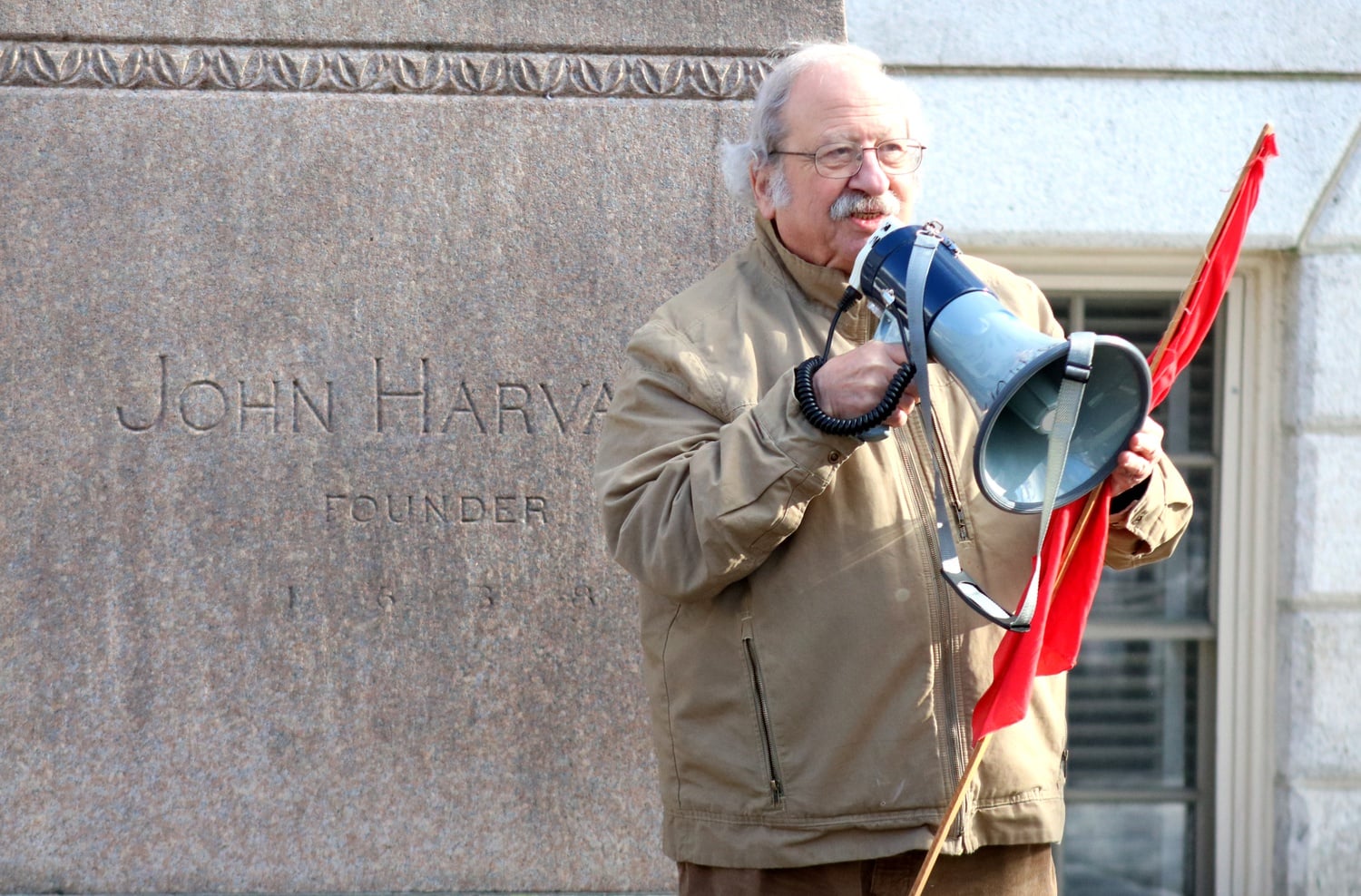
Harvard Kennedy School lecturer Marshall L. Ganz ’64, one of the Democratic left’s best-known organizing strategists, is dropping his involvement in Graham C. Platner’s insurgent Maine Senate campaign, saying recent sexual assault allegations have doomed the Democrat’s candidacy.
Ganz, a political organizing scholar with a hand in several of the most successful progressive grassroots campaigns in recent decades, visited Platner’s nascent campaign earlier this year after campaign manager and longtime organizer Ben Chin reached out to “compare notes” on organizing strategy.
Chin, who previously served as deputy director of the Maine People’s Alliance, had known Ganz for years through progressive organizing circles.
“I thought they were taking a pretty good approach,” Ganz said in a Wednesday interview, noting he spent a day in Maine meeting with organizers, speaking with Platner, and attending a town hall in an “exploratory” capacity.
“They were organizing, which most campaigns are not doing, and I was interested to learn more about what was working, what wasn’t, and how they were pulling that off,” Ganz said.
Last week, he set up a call with Chin for Tuesday to catch up on the state of the campaign and explore further involvement. But that call never took place.
Before the two could connect, Jenny Racicot, a former girlfriend of Platner’s, told Politico that Platner entered her home uninvited while drunk one night in 2021 and sexually assaulted her. One day later, The Washington Post reported that Lyndsey Fifield, another former girlfriend, said Platner removed condoms during sex without her consent. Platner’s campaign has denied both allegations.
“I don’t see how they can survive,” Ganz wrote in a Tuesday statement to The Crimson, referring to the Platner campaign.
“Making predictions these days is pretty foolish,” Ganz added. “But I do think its curtains.”
A spokesperson for the Platner campaign did not respond to a request for comment.
Get The Crimson in your inbox.
In the wake of Monday’s allegations, many prominent progressives withdrew their support for Platner and called on him to exit the race.
U.S. Senator Bernie Sanders (I-Vt.), a key Platner backer, withdrew his endorsement and urged Platner to step aside. Sanders endorsed Troy Jackson, an unsuccessful gubernatorial candidate and former state senator, to replace Platner on the ballot.
Platner has not announced whether he will leave the race. He must withdraw by July 13 for the Maine Democratic Party to replace him on the November ballot.
The sexual assault allegation is the latest scandal to dog Platner’s campaign. In June, several of Platner’s former girlfriends came forward detailing what they called “unsettling” behavior in their relationships with him. Earlier that month, reports surfaced of sexual messages he sent to women while he was married.
Platner also attracted controversy this spring after reports surfaced about a since-covered tattoo resembling a Nazi symbol and dismissive online comments he had made about rape.
The Maine race, where Platner was challenging longtime Republican senator Susan Collins, had been seen as a litmus test for a new wave of unconventional but charismatic candidates on the party’s left flank.
Those conditions drew interest from Ganz, who helped design the grassroots organizing model for Barack Obama’s 2008 campaign and has continued to advise progressive candidates and organizers since.
He most recently advised Zohran Mamdani’s mayoral campaign on its grassroots organizing effort. Mamdani, who has called on Platner to withdraw, shares a political consultant with Platner in Morris Katz.
Ganz said he believed it was essential to preserve the organizing base that Platner’s campaign had built, even if Platner exits the race.
“The people that built the whole campaign, they didn’t disappear,” Ganz said. “I think they’re trying to take very seriously that it not get swept away.”
Ganz called it a “really difficult spot” for the organizing team and said the campaign’s collapse was “not just a question of one person” but the movement they had built.
“I really feel for them because they’re trying to somehow redeem what they thought they were fighting for,” he said.
—Staff writer Hugo C. Chiasson can be reached at [email protected] or on Signal at hcc.35. Follow him on X @HugoChiassonn.
—Staff writer Elise A. Spenner can be reached at [email protected] or on Signal at elisespenner.82. Follow her on X @EliseSpenner.
Want to keep up with breaking news? Subscribe to our email newsletter
Have a tip for The Crimson? Share it confidentially