‘A Permanent Invitation’: Ziyah Gafić on Photography, War, and the Work of Peace
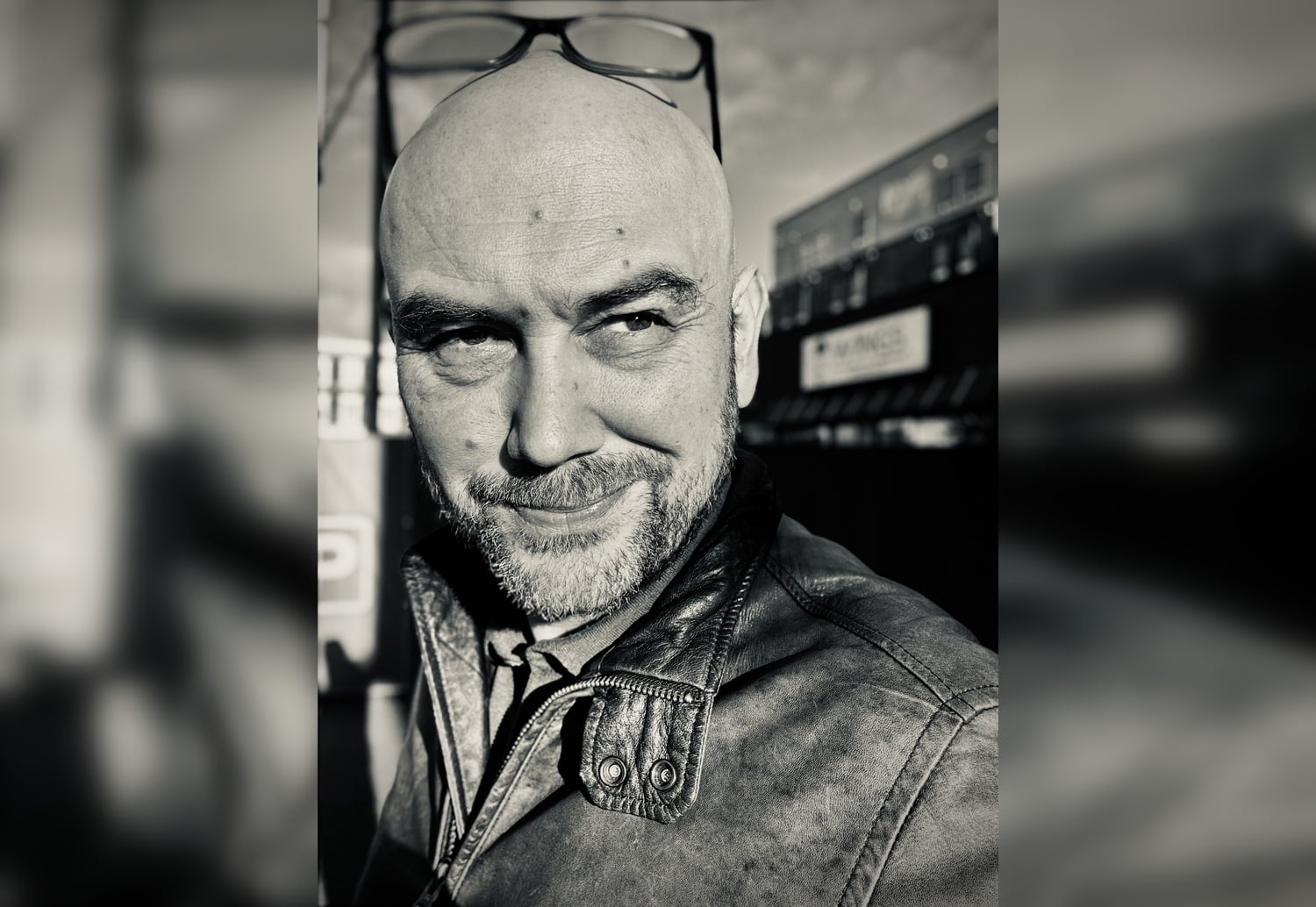
For Ziyah Gafić, documentary photography begins with access. The Sarajevo-based photojournalist has spent more than two decades recording what remains after violence — from Bosnia and Herzegovina to Muslim communities in Palestine and Pakistan. For Gafić, a camera does more than register a scene. It lets a photographer cross the threshold into another person’s experience.
“It allows you to be in places where you are usually not invited,” Gafić said in an interview with The Crimson. “It’s like a permanent invitation to other people’s lives.”
Gafić began taking photographs as a teenager, interning at a local magazine during the final months of the Bosnian War. He had no formal photographic training and later studied comparative literature, an education that gave him a vocabulary for constructing stories across a different medium.
“By studying comparative literature, you’re exposed to this variety of different ways to tell stories — from Eastern traditions to Anglo-Saxon and different canons of storytelling — which, with a little bit of imagination, you can apply to photography,” Gafić said. “Because photography, be that documentary or fact-based photography or any other genre, is storytelling.”
The stories available to Gafić were inseparable from Sarajevo, where the war began when he was 12. He resists reducing those years to a single register. Alongside daily danger, Gafić remembers the unusual liberties of adolescence during wartime. What endured most clearly wasn’t one image or episode, but a way of seeing.
“I think war experience — be that one day at war or four years — shapes your worldview,” Gafić said. “At least in my case. And I think that’s more important than anything else.”
In 1999, at 19, Gafić traveled to Kosovo as the Kosovo War escalated into a humanitarian crisis. It was his first assignment abroad for the independent Bosnian news magazine where he worked at the time. He persuaded the editor that photographs from their own reporter would distinguish the magazine from competitors using the same wire-service images. The trip brought him a network of international workers he knew from Bosnia and, after he returned, an illness that took months to recover from. It also clarified his ambition.
“But then I was like, ‘Yeah, this is what I want to do.’ I’m saying this from the perspective of a 19-year-old. ‘This is something I want to do, and these are the experiences I want to have,’” Gafić said. “That was the reasoning back then. Admittedly, very simplistic, but it was in line with age and experience.”
That ambition developed into “Troubled Islam: Short Stories from Troubled Societies,” a long-term project about the aftermath of violence in predominantly Muslim communities. Built over roughly a decade in the post-9/11 world, the series reached across Bosnia, Palestine, Kurdistan, Iraq, North Ossetia, Chechnya, Lebanon, Afghanistan, and Pakistan. The completed work was exhibited at War Photo Limited in Dubrovnik in 2010 and published as a monograph of the same name.
Rather than treating those societies as interchangeable, Gafić used the project to compare how ordinary life persists after communities, rituals, and social structures have been torn apart. The point isn’t to promise that one photograph can transform a life, but to build a record through accumulation.
“Whether that is going to have some result or impact on their immediate life and livelihood, that’s a different conversation, but I’m happy even if it’s this tiny,” Gafić said. “It’s the cumulative effect that I’m interested in rather than the effect of a single action.”
In the photographic project “Quest for Identity” — began in 2010 and collected in a book published two years later — Gafić turned from faces to objects. He set out to create a visual archive of every personal effect recovered with human remains from Bosnia’s mass graves, part of the effort to account for the roughly 30,000 people who went missing as a consequence of the 1992–1995 Bosnian War. He photographed watches, keys, combs, glasses, toothbrushes, and other belongings that had been cleaned and catalogued for use in identifications and as evidence in war crimes trials.
Against a clinical background, the objects become both an archive and portraiture. By removing the faces and surroundings that viewers might perceive as foreign, Gafić sought to collapse the distance between viewer and victim through objects familiar enough to belong to almost anyone.
“We bring the conversation down to symbols, which are arguably universal, and so it kind of levels the field and causes an emotional response, as it should,” Gafić said.
Gafić now directs the VII Foundation’s work in Sarajevo, where the nonprofit offers tuition-free courses and workshops intended to cultivate new and underrepresented perspectives in visual journalism. His practice has expanded from making photographs to educating emerging visual journalists. For Gafić, teaching isn’t separate from the ethics of representation. International journalism still shows much of the world through the perspectives of a comparatively narrow group. Training people closer to the communities being documented can begin to correct that imbalance.
“In our professional careers as practitioners, we worked in most of the world, and we know that the world as we see it today in photography, in press, journalism, is largely represented by a certain class of people — people coming from certain countries or certain parts of the world — and a big part of the world is kind of excluded from that conversation, even though it concerns them the most,” Gafić said. “So we feel that putting a dent in that imbalance, in how the world is visually represented through education and training, is a moral thing to do.”
That concern with who represents conflict also informs “Imagine: Reflections on Peace,” a multimedia project conceived by VII Foundation co-founder Gary Knight and producer Fiona Turner. For the exhibition now at the Weatherhead Center for International Affairs, Gafić joined Knight and Turner as a co-curator. The wider project follows six countries emerging from war, pairing archival reporting with contemporary work to ask why peace takes such different forms. The Weatherhead presentation focuses on Bosnia and Herzegovina, Cambodia, Colombia, and Lebanon.
“The idea was also to try to understand why is it so hard to imagine peace? Why peace can’t be just the absence of violence, which is a very common way to describe peace,” Gafić said. “It’s also a very dry description of peace.”
Those questions will move from the gallery to the auditorium on Oct. 22. A public viewing at CGIS South will be followed by “Testimony (1989–2026),” the Samuel L. and Elizabeth Jodidi Lecture by Ron Haviv, a fellow VII Foundation director and one of its co-founders. Drawing on more than three decades of work across Central America, the Balkans, the Arab Spring, Ukraine, and the United States, Haviv will consider the ethical, practical, and personal demands of bearing witness through visual journalism.
That issue of ethics has become more urgent as generative artificial intelligence unsettles photography’s old social contract. For Gafić, a camera could once be trusted to have registered something new. Now, it must return to the person behind the image. In an exhibition devoted to what happens after peacemakers and diplomats leave, Gafić’s parting question turns the act of looking back toward the witness.
“Now more than ever, we trust sources, which are people, professionals. I think actually that’s really beautiful. The technologies can never be out of the equation, but suddenly we made this full circle, and that focus is again on who is telling me this, or who is showing me that,” Gafić said.
If photography is a permanent invitation into other people’s lives, Gafić’s work asks viewers to consider who is extending it.
“Imagine: Reflections on Peace” is on view at the CGIS South Building through Jan. 4.
—Staff writer Erlisa Demneri can be reached at [email protected].
Want to keep up with breaking news? Subscribe to our email newsletter
Have a tip for The Crimson? Share it confidentially